Events and Convenings
Join us at conferences, workshops, and community gatherings that are shaping the future of water innovation
Munich Climate Week 2026
The Water Resilience Stage
An afternoon at Munich Climate Week, hosted by The Water Foundation: eight conversations on policy, capital and technology for a water-resilient capital.
, Munich
From the Foundation

The Water Foundation
Water deserves a seat at the centre of the climate conversation - and we’re excited to bring it to the stage at the first Munich Climate Week, hosting a high-level event on Tuesday, 20 October, bringing together public leaders, corporates, family offices, investors and technology innovators. An entire afternoon to demonstrate what becomes possible when policy, capital and technology come together to turn water resilience into action. 📍Register here: https://lnkd.in/dsUjVnWK #MunichClimateWeek #WaterResilience #WaterSecurity #BlendedFinance Dominik Krause Mariana Pedraza-Copete Andy Goldstein Paula Schwarz David Schwager Sabine Ringlstetter Jasper Schlump Gianluca Keller Henrik Will Till Rummenhohl Nicolai Bode Olle Wahlqvist
121LinkedIn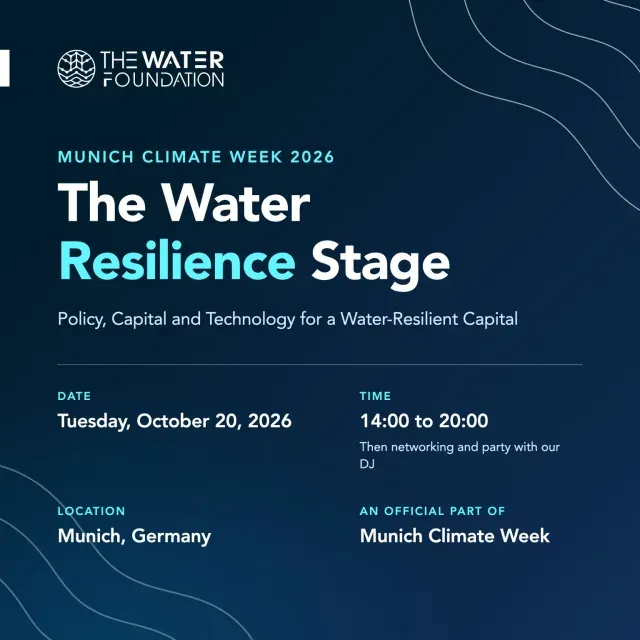
The Water Foundation
FACT THURSDAY AFRICA HAS NO SINGLE WATER TARIFF. IT HAS A SHARED FINANCING QUESTION. Africa is 54 countries, and water tariffs are set country by country, often even utility by utility. Each reflects a different priority. Access, affordability, regulatory discipline, or a basic right. Kenya: Across 94 providers, average operating cost coverage in 2024/25 stood at 103%, the median at 98%, and non-revenue water at 48%. Rwanda: The 2019 tariffs gave households an affordable first block. At introduction, households covered about 26% of supply costs, with the state financing the rest. South Africa: Eligible indigent households receive 6 kilolitres of free basic water per month. Uganda: The national utility reported an operating profit of UGX 131 billion in 2022/23, yet its tariff still does not cover full costs. According to estimates cited by the OECD for 2023, annual water investment in Africa stands at USD 10-19 billion, against a need of USD 64 billion. In emerging markets, private capital supplies 9% of water, sanitation and hygiene finance, against 87% in telecoms. A low tariff mainly benefits households that are already connected, while unconnected households must buy water at high prices from vendors. Kenya offers one possible solution. Output-based aid covered up to 60% of project costs and was released against verified results, while users repaid the rest through connection fees and tariffs. Local banks lent under a 50% USAID guarantee. Zambia, by contrast, illustrates the risks of purely donor-funded models: its Devolution Trust Fund, which pooled donor money in a basket-financing arrangement, had to close in 2019 for lack of further commitments. Looking across these countries shows that affordable services and investment-ready infrastructure require financing structures built on each country's own priorities, revenues, and capacities. That is why, at The Water Foundation, we work with this diversity. The tariff remains a national decision, and capital is organised around it: tariffs and budgets are disclosed transparently, guarantees and local-currency loans bring banks on board, pooled funds rest on lasting public commitments, and grants are disbursed against verified results such as new connections or reduced non-revenue water. Sources: RURA; WASREB; NWSC; OECD; World Bank; NWASCO #WaterFinance #BlendedFinance #Africa #TheWaterFoundation
101LinkedIn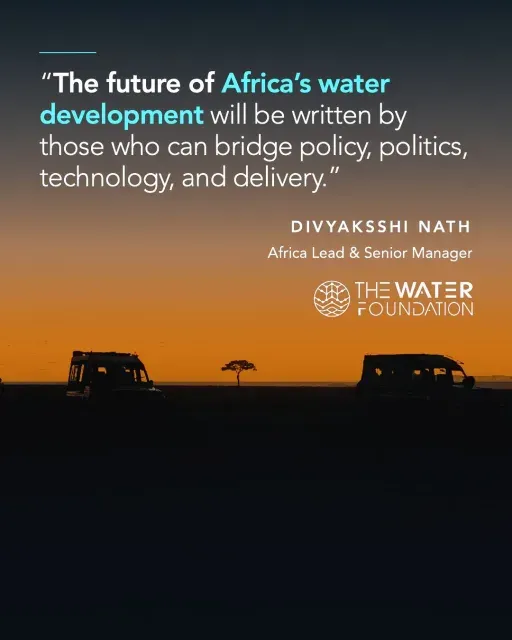
The Water Foundation
World Water Week 2026. Stockholm. Scaling water resilience. With “Scaling Water Resilience” at the heart of this year’s World Water Week, TWF is looking forward to an immersive week in Stockholm. One of the key highlights being a joint session with Alliance for Global Water Adaptation (AGWA) & John Matthews, PhD on August 25th: the Water Resilience Co-Investment Dialogue. This year we are focussing on the structures that uphold systemic inequalities and perpetuate imbalances that impact global water resilience. Because water’s biggest constraint isn’t technology as much as it is heredetary structural constraints in getting solutions deployed and financed globally. We already know a lot of the solutions that work: desalination, water reuse, catchment restoration. What is missing is the bridge between proven water solutions and the institutional capital needed to take them to scale. That’s the gap The Water Foundation is working to close: connecting capital deployment vehicles and institutional capital with the projects that can build water resilience at scale, working towards our one billion people impacted by 2035 goal. If you’re in water - a manager raising capital, an allocator looking for opportunities, or a developer building critical systemic infrastructure - let’s speak on the ground. Verena Alice Sturm and Christoph Schwager will be in Stockholm from 25 to 27 August. #WorldWaterWeek #WorldWaterWeek2026 #Water #BlendedFinance #WaterResilience #ImpactInvesting
346LinkedIn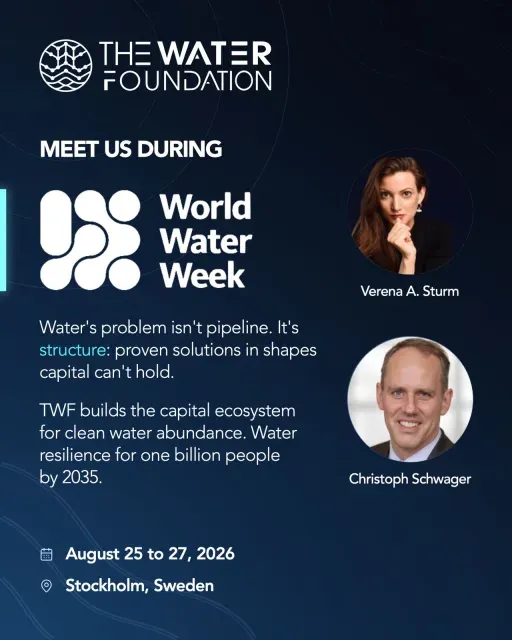
The Water Foundation
Liquid Geopolitics | Water, Land and Power: The Wolf Economy 2.0 Mongolia's mineral wealth positions it at the centre of the global energy transition. Copper, coal and rare earths will power the decades ahead. Every tonne extracted, every megawatt generated, rests on the one input the dryland holds least: water. How Mongolia secures that input will shape not only its own trajectory, but the playbook for resource economies across Central Asia & the Global South. On 23 August, on the occasion of COP17 of the UN Convention to Combat Desertification (UNCCD) in Ulaanbaatar, The Water Foundation convenes Liquid Geopolitics, an invite-only, closed-doors session co-hosted with Ard Financial Group and Onch & Co. The evening moves from provocation to programme: the Wolf Economy 2.0, the water-minerals nexus, the dichotomy of mines, megawatts and livelihoods, and the technology frontier of a dryland water economy. It closes where the real work begins: bilaterals over dinner. Moderated by Onchinsuren Dendevsambuu, Verena Alice Sturm, Ganhuyag Chuluun Hutagt and Christoph Schwager. 📍 Kryptos, Central Tower, Ulaanbaatar 🗓 23 August 2026, from 18:00 Private invitation. Admits one plus one. RSVP: events@the-water-foundation.com Event details: https://lnkd.in/dRYUQSP6 #LiquidGeopolitics #WaterResilience #UNCCDCOP17 #Desertification #Mongolia #WolfEconomy #WaterInvestment
9LinkedIn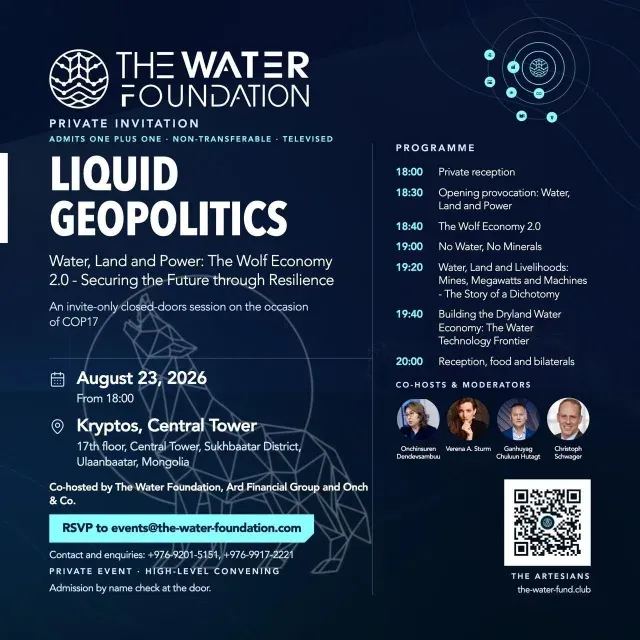
The Water Foundation
UNCCD COP17 is underway in Ulaanbaatar, Mongolia - and The Water Foundation is in the room. Land degradation and scarcity are one problem, financed as two. Restoring land at scale depends on capital structured for water. That is the case we are bringing to COP17. Verena Alice Sturm and Christoph Schwager are on the ground from 23 to 26 August, engaging with the parties, financial institutions, and implementing partners delivering land degradation neutrality. If your delegation is working on land restoration, drought resilience, or mobilising capital for either - we welcome the conversation. See you in Mongolia. #UNCCDCOP17 #LandDegradationNeutrality #water #blendedfinance
11LinkedIn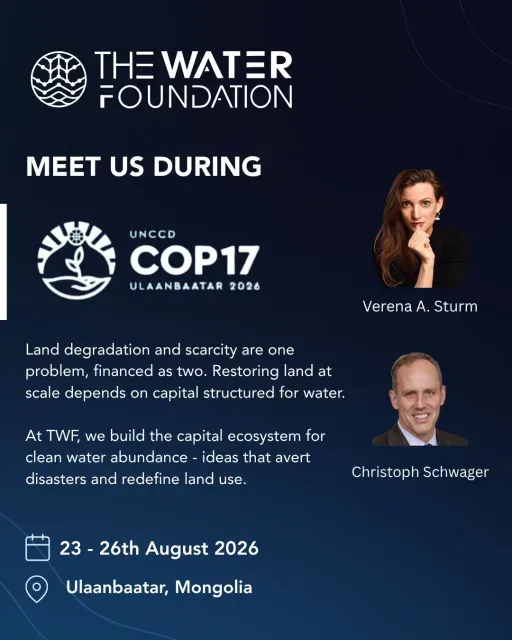
The Water Foundation
Venture Capital and Private Equity models combined with exponential thinking, are now starting to be applied to transforming global water resilience outcomes. At TWF we create a capital & support ecosystem for those making meaningful breakthroughs in clean water abundance. The right breakthroughs can mitigate impending disasters or avert them entirely, as well as redefine land use and productivity around the world in profound ways. Verena Alice Sturm and Michael Staton are in San Francisco for a week of conversations at the intersection of water resilience, venture capital, and systems-level impact. One thread running through our meetings around the world: venture capital as a development tool. Lives lifted up through catalytic capital that is structured to solve water challenges at scale: aligning impact and return incentives by producing market-rate ROI to attract a robust supply chain of capital. Exciting developments in the pipeline. More to come soon. If you're in the Bay Area and ready to rethink the intersection of water, climate, and venture: find them. We'd love to talk. #Transformativeventure #VentureCapitalasadevelopmentaidtool #WaterInvestment #WaterTech #VentureCapital #BlendedFinance #Missiondriven #WaterResilience #catalyticcapital #TheWaterFoundation #nextgen #investment #impactfinance
162LinkedIn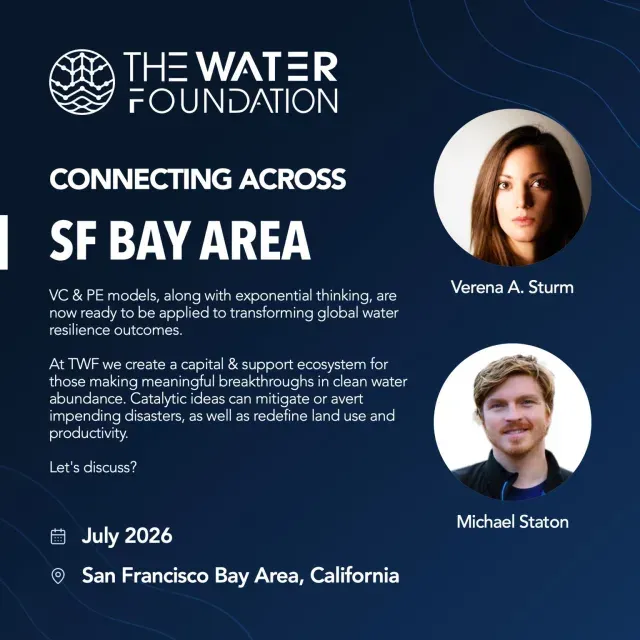
The Water Foundation
FACT THURSDAY THE AI BOOM HAS A WATER BILL. AND SOME COUNTRIES ARE STARTING TO READ IT. Every time a large language model processes a query, it generates heat. That heat has to go somewhere. The answer, almost universally, is water. Most data centers use evaporative cooling - hot air passes through towers containing water, which evaporates to absorb the heat. Around 80-90% of that water is lost as steam and never recovered. The system is linear by design: water in, heat out, no return loop. AI data centers consumed nearly 1 trillion litres of water in 2025 alone. More than $130 billion in data center projects were delayed or abandoned in the first quarter of 2026 alone - not because of a technology problem, but a water one. Two-thirds of new hyperscale campuses built since 2022 sit in areas of high or extreme water stress. These facilities are not drawing from surplus. They are competing directly with municipal drinking water supplies. Almost none of this is being systematically disclosed. Fewer than a third of data center operators actively track water use metrics. No binding global framework exists. But the regulatory response is forming - and the gap between early movers and everyone else is widening. The EU now requires all data center operators across 27 member states to report energy and water usage annually. Minnesota became the first US state to establish a formal water permitting requirement for large data centers in 2025. And some countries are going further - rethinking the waste itself. In Copenhagen, data centre operator atNorth is routing warm water from direct liquid cooling into the city’s district heating network, providing heat for more than 8,000 homes from 2028. Near Helsinki, Microsoft is building what it describes as the world’s largest scheme to recycle data centre waste heat, expected to heat Finland’s second-largest city and two neighbouring municipalities. Water consumed cooling a server can warm a home in the same city. That is not a niche experiment. It is an emerging infrastructure model. The financing and governance architecture to scale it is still being built. That is the gap. When potable water is redirected to server cooling with no binding disclosure and no cost mechanism reflecting true scarcity, the expense of responding - through purification infrastructure and municipal supply rebuilds - will not fall on the technology sector. It will fall on governments and the populations they serve. At The Water Foundation, we are launching an AI Water Nexus working group focused on policy, technology, and infrastructure financing solutions to address the hydrological impact of AI at scale. Because the solutions exist. The frameworks to deploy them do not yet. Sources: World Bank; European Commission; US Environmental Protection Agency; Bloomberg Intelligence; Information Technology and Innovation Foundation (ITIF)
81LinkedIn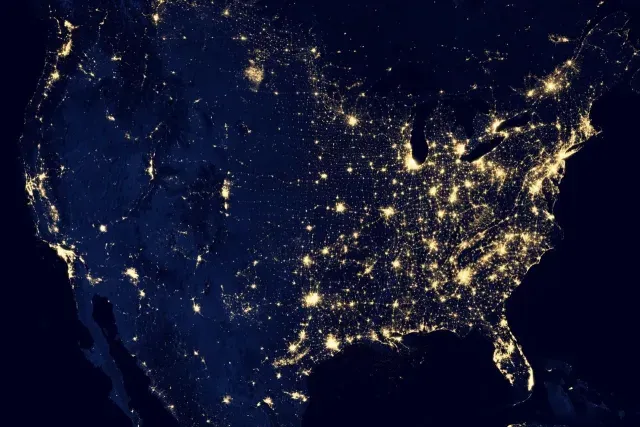
The Water Foundation
Looking forward to the Anthropia Festival tomorrow in Duisburg - a great platform connecting business, philanthropy, policy and civil society around capital and collaboration for societal challenges. Our co-founder Verena Alice Sturm will be there on behalf of The Water Foundation, where we're mobilising philanthropic and private capital towards measurable water resilience at scale. If you're attending, reach out to talk water security, blended finance, nature resilience or investment opportunities in the water sector. See you in Duisburg.
21LinkedIn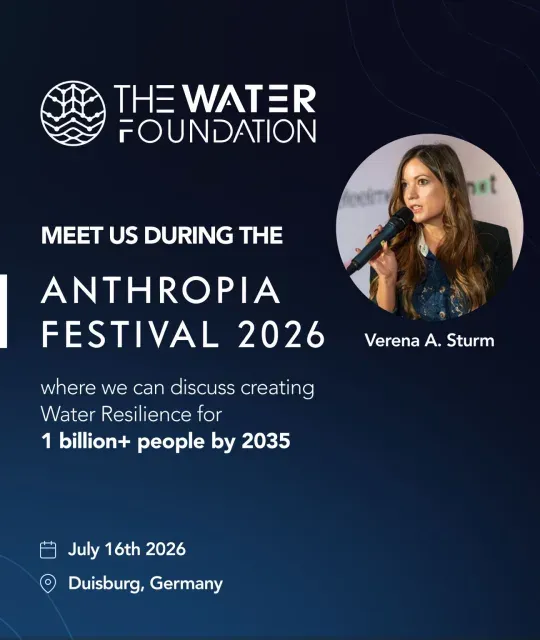
The Water Foundation
London Climate Action Week 2026: We’ll be there. Water sits at the centre of almost every conversation happening this week - food security, infrastructure resilience, climate adaptation, capital mobilisation. And yet the capital, policy attention, and cross-sector coordination it demands remain chronically underfunded and fragmented. That is precisely what we solve for. Verena Alice Sturm and Sarabeth Brockley will be at London Climate Week connecting with the policymakers, investors, and practitioners who are serious about turning climate commitments into systems that actually work. If water, blended finance, or building infrastructure that lasts is on your agenda - find them and let’s talk. The work is urgent. The partnerships matter. See you in London. #LondonClimateActionWeek #water #blendedfinance #sustainability
6LinkedIn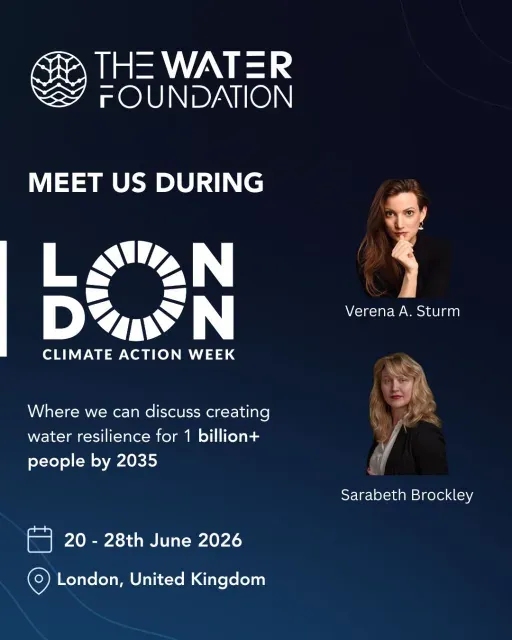
The Water Foundation
FACT THURSDAY WATER IS THE ONLY CRITICAL RESOURCE WITHOUT A GOVERNING ARCHITECTURE. The IAEA gave nuclear energy a shared evidentiary base and an institutional forum. The IPCC did the same for climate science. In both cases, what emerged was not bureaucracy. It was architecture: common standards, accountability, a structure that turned scattered national interests into coordinated action. Water has never had an equivalent. This is not an oversight. It is structural. Water is transboundary by nature but managed nationally by default. Each country controls its own segment of a shared system, and coordination depends on voluntary agreement at every juncture. Without a framework that raises the cost of non-participation, the rational position for most governments is to protect their own access and wait. The result is a collective action failure, unfolding slowly, across nearly every major basin on earth. The data shows exactly where that failure lands. In 2024, only 43 out of 153 Member States sharing transboundary waters had operational arrangements covering 90% or more of those resources. More than 20 countries had none at all. 43% of countries have no flood alarm systems for transboundary water bodies. 63% have no drought alarm systems. 64% have no joint disaster risk reduction strategies for shared basins. This is not a story about bad actors. It is a story about what happens to investment, planning, and accountability in a system with no enforceable rules. The harder truth: The governance gap and the finance gap are the same gap. Institutional capital requires a risk taxonomy to underwrite long-term infrastructure. Without standardised water accounting and binding transboundary frameworks, water risk stays unpriced and largely invisible on balance sheets, where it accumulates quietly until it surfaces as a crisis. What water requires is not a new multilateral agency. It requires what the IPCC provided for climate: an institution with enough weight to make inaction politically costly, backed by agreed accounting standards, binding transboundary frameworks, and shared early warning infrastructure. The building blocks exist. The 2026 UN Water Conference is one moment to advance them. But a moment only matters if the architecture is ready to receive it. At The Water Foundation, this is part of the mission: building the governance and financial frameworks that convert political will into coordinated action, because one without the other has consistently proven insufficient. Sources: UN-Water, OECD, World Bank Picture Credit: Bernd Dittrich via Unsplash #WaterGovernance #WaterSecurity #BlendedFinance #SystemsChange #WaterFoundation
11LinkedIn
The Water Foundation
CAPITAL IS LOOKING FOR RESILIENCE. WATER IS LOOKING FOR CAPITAL. SuperReturn, SuperVenture, and one of the largest capital allocation gaps in global markets: The Water Foundation team just spent a fast-paced week in Berlin with a growing team of co-conspirators and co-allocators, builders, operators, and partners helping to turn #water into an #investableassetclass. We spoke with allocators, fund managers, family offices, foundations, entrepreneurs, corporates, and development finance institutions from across the private and public capital ecosystems. Despite very different starting points, many conversations converged on similar questions: > How do we build #longtermsystemicresilience? > How do we secure #criticalplanetarysystems? > Where are markets failing to #allocate capital efficiently? > What does efficiency mean when we need #energy, #data and #cleanwater to continue to flow? > Where are the #opportunities that emerge from that disconnect? #Water naturally appeared in far more of those discussions than a traditional investment audience would expect. Water was rarely the topic of the meeting, but often part of the answer. Not because it has suddenly become "fashionable", but because it sits underneath so many of the sectors attracting capital today. It has become the necessary #nextthought. The disconnect is substantial: the World Economic Forum estimates the global #waterinfrastructurefinancinggap at approximately €6.5 trillion. The pieces required to build a meaningful next step for the global water ecosystem already exist and they are moving: #Exceptionalentrepreneurs. #Specialistinvestors. #Strategiccorporates. #Philanthropiccapital. #Developmentfinance. #Institutionalinterest. Bringing them together is where #alpha exists, where #impact exists and what makes TWF as a platform so interesting to work on: At The Water Foundation we build the #capitalinfrastructure capable of expanding #accesstocleanwater for more than #onebillion people while generating market-rate returns. We left Berlin with new partnerships spanning capital, technology, and deployment and explored how #waterexposure can be integrated into existing infrastructure, climate, and #privatemarketallocations. Thank you to everyone who shared ideas, challenged assumptions, made introductions, and spent time with us in Berlin. The ecosystem around water continues to strengthen thanks to people willing to build across disciplines, sectors, and geographies. We are thankful for the steady support of partners and friends such as Rancilio Cube SICAF and Luca Rancilio, swiss impact office and Kostis A. Tselenis, Redstone and Klas Johansen and Michael Brehm, Octavian Graf Pilati, Christian Stiebner, Jan Morgan Urayeneza, Carolin Wais, Seth Bannon, Dr. Beshar Chaker Van Roosbroeck, Francesca Dessì, Rodrigo Ferreira Jerome Ternynck Ted C. Patrick Knodel and the many thought impulses cumulating in #waterexpolorationinspace (thanks @Seraphim Space).
343LinkedIn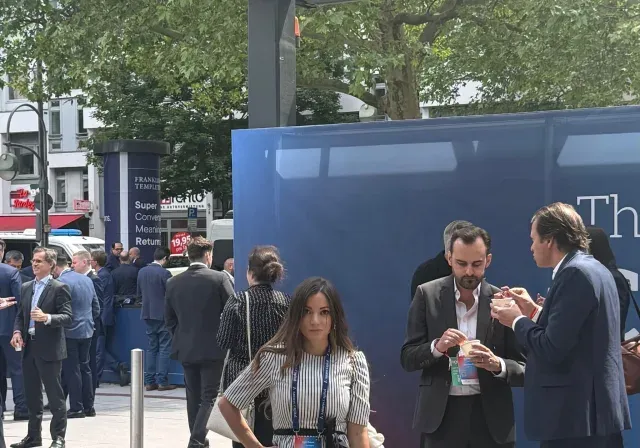
The Water Foundation
172LinkedInMore than 90% of #climateimpacts are felt through water: yet, less than 5% of #climatefinance reaches adaptation, and only around 1-2% reaches water directly. Next week, our team will be at SuperReturn and SuperVenture in Berlin, discussing what we believe remains one of the most significant mispricings in capital markets today. Water is moving from an undervalued utility to a strategic infrastructure and security asset. It sits beneath almost every investment theme attracting capital today: from #energy, #AI infrastructure, #semiconductors, agriculture, #industrial resilience, #climate adaptation and #national security. Allocators are not treating water as the category beneath all other categories - yet. We don’t believe the world suffers from a lack of #watersolutions. We believe it suffers from a lack of alignment between #strategy, #capital and #technology. Strategy defines direction. Capital enables scale. Technology validates deployment. The challenge is bringing all three into one coordinated system. The driving motivation among the upper percentile of investors is not money lost, it is recognising that a new asset class has formed after the crowd has already moved. So the question we are carrying with us to Berlin is a simple one: What if water today is the last true scarcity play? If water as an asset class is where energy infrastructure was about 25 years ago, and where data centres were 10 - 15 years ago? We are inviting some of the world’s sharpest capital allocators to think through the implications with us. If you’re already exploring the same shift, let’s talk in Berlin and see our attached position brief. Verena Alice Sturm Christoph Schwager Thomas J.M. B. #SuperReturn #SuperVenture #WaterSecurity #PrivateCapital #Infrastructure #ClimateAdaptation #FamilyOffices #ResourceSecurity #WaterInvestment #climateimpacts #climatefinance #energy #AI #semiconductors #industrial #climate #national #watersolutions #strategy #capital #technology
The Water Foundation
There is a global water investment gap measured in trillions. The World Economic Forum estimates the global water infrastructure financing gap stands at approximately €6.5 trillion. The World Bank Group has estimated that up to $7 trillion must be mobilized by 2030 to meet global water-related commitments. At the same time, water remains structurally underrepresented in climate finance. According to analysis cited by the International Water Management Institute (IWMI), water-related climate finance averaged only around 3% of total climate finance between 2016 and 2020, despite water being one of the primary channels through which climate risk is experienced. This is the gap The Water Foundation is built to address. We are building the capital infrastructure to make water investable: across venture, growth, infrastructure, blended finance, and strategic partnerships. Water affects valuations across infrastructure, energy, agriculture, manufacturing, real estate, and supply chains. The opportunity lies in recognising it before the market does. Water is shaping asset performance across sectors. And the assets most exposed to water risk are not necessarily water assets. Next week, The Water Foundation will be in Berlin for SuperReturn International 2026 and SuperVenture 2026, engaging with investment professionals, fund managers, venture leaders, family offices, and institutions working across climate, infrastructure, natural capital, water, and biodiversity. We look forward to rethinking water as an investable asset class, a resilience category, and a strategic pillar of private capital allocation. If you are attending SuperReturn or SuperVenture in Berlin, let’s talk about how capital can help build water security at scale. Sources: World Economic Forum, World Bank, International Water Management Institute (IWMI). Verena Alice Sturm Christoph Schwager Thomas J.M. B.
14LinkedIn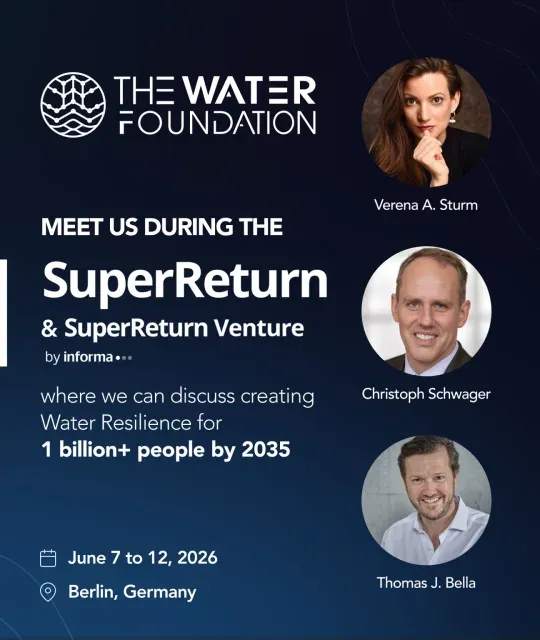
The Water Foundation
A RESILIENT OCEAN ECONOMY IS KEY FOR INTERCONNECTED WATER ECOSYSTEMS This week, The Water Foundation is at the Blue Economy & Finance Forum (BEFF) 2026 at the Grimaldi Forum in Monaco, where we are looking forward to diving deeper into all things Ocean & Water Finance with Romain Ciarlet and the Fondation Prince Albert II de Monaco. BEFF is a highly valuable contribution to the Ocean Finance ecosystem where policymakers, sovereign wealth funds, investors, and ocean leaders come together to catalyze capital for a sustainable blue economy. Water and ocean systems are inseparable. As BEFF tackles blended finance, blue foods, and a low-carbon maritime transition, we're here to connect freshwater resilience to the broader conversation about what a truly regenerative blue economy requires. Several of our team members are on the ground: Verena Alice Sturm, Christoph Schwager, Sarabeth Brockley and Nicolai Bode. Come find us. #BEFF2026 #BlueEconomy #WaterResilience #BlendedFinance #OceanFinance
19LinkedIn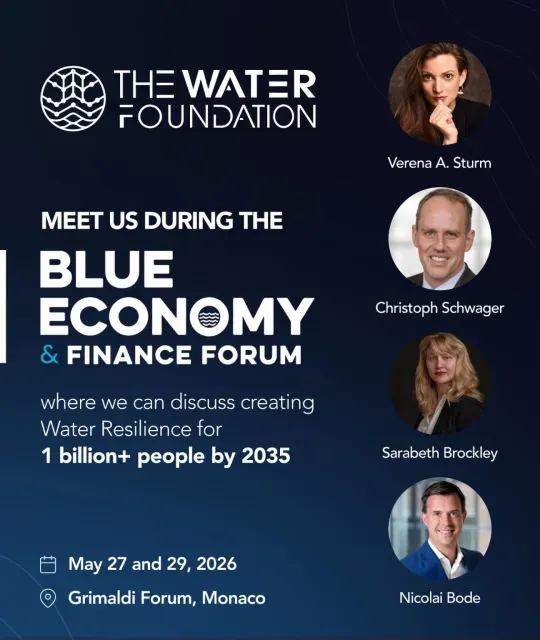
The Water Foundation
COME MEET US TODAY AT KATAPULT FUTURE FEST 2026 IN AMSTERDAM The Water Foundation & Boundless will be in Amsterdam today for Katapult Future Fest, joining innovators, investors, and sustainability leaders shaping the future of climate resilience and systems change. Throughout the event, conversations will focus on technology-enabled sustainability solutions for water systems bridging oceans and fresh water. We are aiming to be part of building new, resilient systems through cross-sector collaboration driving scalable impact. As water increasingly sits at the center of resilience, infrastructure, and long-term economic stability, gatherings like these are critical for connecting bold ideas with actionable solutions. If you're here too, find our Co-Chair Verena Alice Sturm and let's talk water, climate, and what actually moves the needle towards building resilient systems for the future. Bold ideas need real partners. Let's connect. Katapult Foundation #KatapultFutureFest #WaterResilience #ClimateAction #Innovation #WaterResilience #boundless #katapultocean #ClimateInnovation #WaterResilience #Sustainability #ClimateAction
113LinkedIn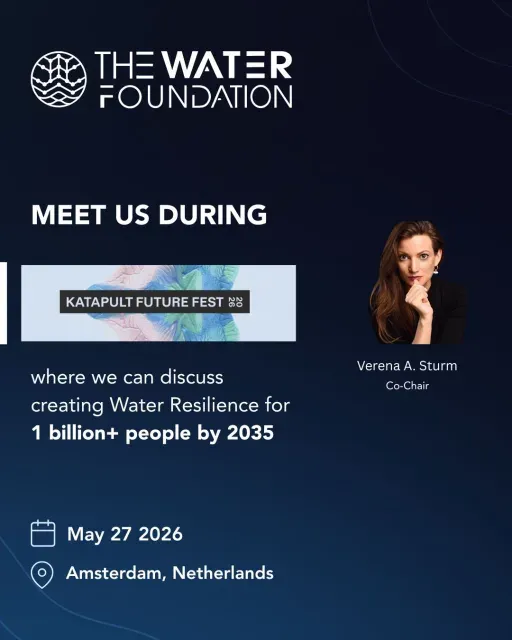
The Water Foundation
On the ground perspective of IFAT Munich 2026 from our very own Thomas J.M. B.
3LinkedIn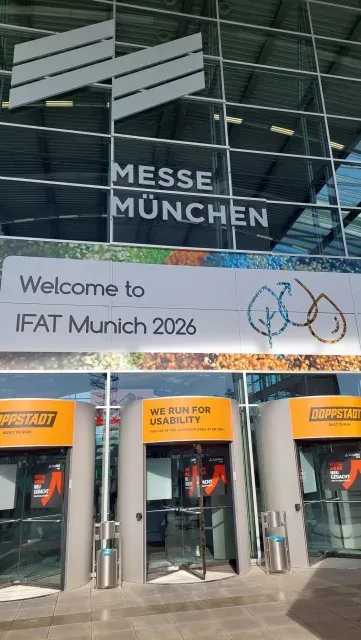
The Water Foundation
IFAT Munich 2026 made clear, water 🚰 is no longer a niche environmental issue. It is emerging as one of the defining infrastructure, security, and investment priorities of this century.⏳️ Over four days in Munich, the world’s leading trade fair for environmental technologies brought together governments, utility providers, investors, industrial leaders, engineers, founders, and policymakers from across the globe to discuss the future of water, wastewater, circular systems, resource efficiency, and climate resilience. What stood out most was the convergence taking place across sectors and geographies: Italian pump engineering met Dutch membrane innovation. German industrial precision met large-scale international deployment strategies. Delegations from the Middle East, Europe, Asia, and Africa discussed not only technology itself, but how water resilience increasingly intersects with energy security, industrial competitiveness, sovereign stability, urban growth, AI infrastructure, and long-term economic development. The conversation has shifted towards how quickly systems can scale. At the same time, the core challenges being discussed: • Rising industrial and energy demand, • Aging infrastructure systems across developed and emerging economies, • Increasing geopolitical pressure around resource resilience, • The need for scalable financing and deployment models across the water sector, • Growing water stress linked to climate volatility and population growth. These challenges were reflected in the showcased solutions: • Strong focus on smart water management, desalination, wastewater reuse, and circular systems, • Increasing integration of AI, digital monitoring, and industrial efficiency technologies across water infrastructure, • High-level convenings around resilience, sovereignty, infrastructure security, and climate adaptation, • Growing recognition of water as a strategic economic and geopolitical priority👈 It was particularly fascinating to meet operators, utilities, deep-tech founders, infrastructure investors, policymakers, and industrial leaders working on the next generation of water technologies and deployment models, alongside familiar collaborators and long-standing partners across the ecosystem. For us at THE WATER FOUNDATION, IFAT reinforced a core conviction: The technologies required for large-scale water resilience already exist. The challenge now is accelerating deployment, financing, coordination, and system-level integration. Water is increasingly acknowledged as the infrastructure layer beneath everything else: food systems, energy systems, industrial growth, AI expansion, urban resilience, and geopolitical stability. One thing became very visible to me: The reality of a water-centred economy is no longer debateable. It has arrived. #IFAT2026 #WaterSecurity #WaterResilience #Infrastructure #ClimateTech #Desalination #CircularEconomy #WaterInnovation #SystemsChange #TheWaterFoundation
14LinkedIn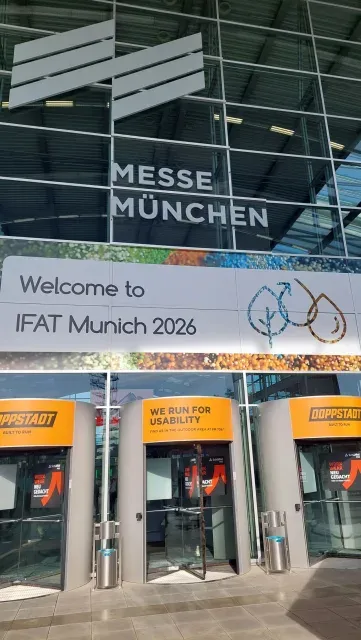
The Water Foundation
FACT THURSDAY WATER INFRASTRUCTURE IS A CASUALTY OF EVERY WAR. WE JUST NEVER CALL IT THAT. In conflict, the world counts missiles, casualties, and oil prices. It rarely counts broken pumps, bombed treatment plants, or the decade-long financing hole left behind when water systems collapse. The data is unambiguous. The Pacific Institute now documents over 1,630 cases of water-related conflict globally - with 228 incidents recorded in 2022 alone, reflecting a clear and worsening trend. This is not exceptional. It is the pattern. And the financial consequences are catastrophic. Syria's post-conflict reconstruction is now estimated at $216 billion. Infrastructure is the single hardest-hit category: accounting for 48% of total damage. Water systems sit at the centre of that number. In Yemen, the water network's reach fell to less than 30% of the population: damage that will continue causing casualties and actively block economic recovery for years to come. This matters beyond the immediate humanitarian toll. Destroyed water infrastructure doesn't cost lives alone. It destroys the investability of entire regions and long term livelihood of millions. No functioning water system means no agriculture, no industrial production, no public health baseline; and, therefore, no bankable project pipeline. Capital cannot flow into a system that doesn't exist. The harder truth: Water is not always collateral damage in conflict. It is increasingly used as a strategic instrument within it. International humanitarian law explicitly prohibits attacking objects indispensable to civilian survival but enforcement remains elusive. The result is a protection gap that no institution fully owns and that civilian populations, and post-conflict economies, pay for long after the fighting stops. This is precisely why water infrastructure must be treated as a financial and strategic asset not ‘just’ a humanitarian concern. Less than 1% of climate capital flows to water solutions today. That gap is structural in peacetime. In conflict and post-conflict contexts, it becomes compounded, because destroyed systems require reconstruction capital before investment capital can even enter. At The Water Foundation, we work across the full capital stack from catalytic capital and blended finance to VC and PE because water's challenges don't fit a single instrument. Protecting water infrastructure is not separate from financing it. They are the same problem. You cannot build a bankable water system in a world where water systems are routinely destroyed and no one is held to account for it Sources: OECD, World Bank Picture Credit: Rose Galloway Green via Unsplash #WaterSecurity #BlendedFinance #WaterInfrastructure #ConflictAndWater #SystemsChange #WaterFoundation
13LinkedIn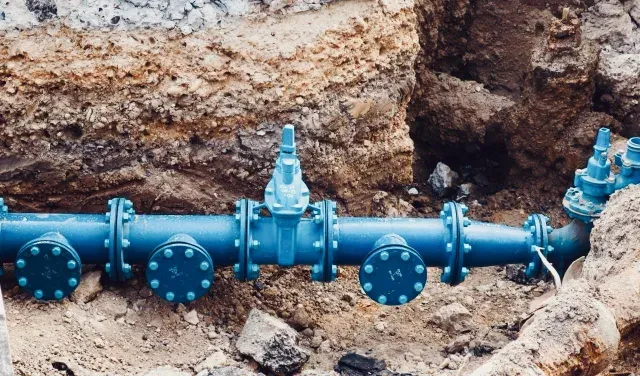
The Water Foundation
On the ground at this week in IFAT Munich 2026, The Water Foundation (represented by Christoph Schwager, Robert Schiele and David Schwager) met with Udo Kolbe of MANN+HUMMEL, key player in global membrane solutions. Udo is a globally acclaimed expert in water and membrane technology, and we are exploring next steps in working together in support of bringing clean drinking water to 1B+ people by 2035. Partnerships like these are essential to advancing The Water Foundation’s mission: accelerating access to scalable, efficient, and sustainable water infrastructure worldwide. At scale. By connecting deep industrial expertise with long-term strategic execution, we help bring proven water technologies into real-world deployment faster, across municipalities, industry, and water reuse applications. We are working in service of a future where innovation, capital, and implementation go hand in hand to solve global water challenges at scale. #IFATMunich2026 #waterchallenges #WaterFoundation
532LinkedIn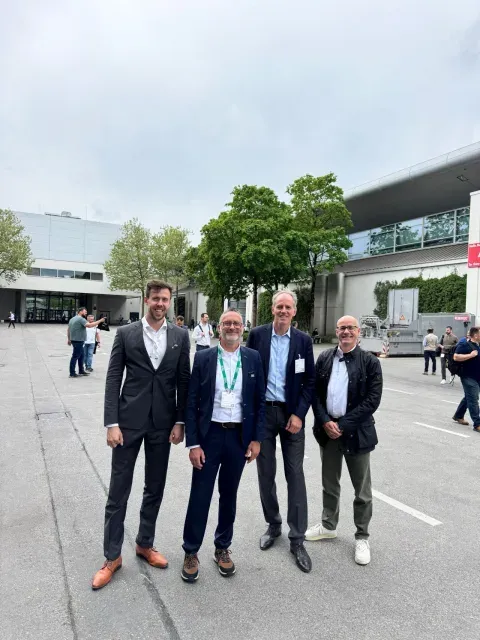
The Water Foundation
The Water Foundation will be in the city for Climate Week Zurich 2026 on May 7th and 8th, joining a growing ecosystem of leaders across climate, capital, and innovation. Representing The Water Foundation is Robert Schiele, advancing the mission of building water resilience for 1B+ people by 2035. Robert will also be delivering a keynote at First Climate, speaking on the future of Carbon Markets and their role in scaling climate impact. Throughout the week, conversations will focus on accelerating investment into scalable water solutions and strengthening the link between water, climate, and capital. Those in Zurich are encouraged to connect and explore opportunities to drive impact together! #ClimateWeekZurich #CarbonMarkets #WaterResilience #Sustainability #FirstClimate
19LinkedIn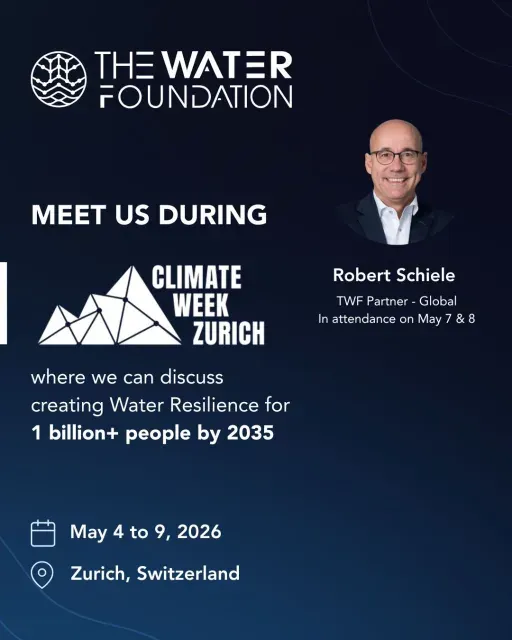
The Water Foundation
COME MEET US AT IFAT Munich 2026 The singularly most important conference for hands-on, DeepTech solutions in the water space is coming back to Munich: IFAT Munich 2026. The world's leading trade fair for water, wastewater, waste and raw materials management provides a central meeting place & platform for innovation, exchange and sustainable solutions that tackle real problems on the ground. This year, we are excited to engage with cutting-edge tech solutions providers across these 3 core tech leap prediction areas: 1. Full scale digitisation in water management 2. Resilient infrastructure & smart cities 3. Circular economy, especially new approaches to resource conservation With The Water Foundation partaking for the first time, we are excited to deepen sector-wide connections, forge new alliances and have so many of our team members in one spot. We are especially happy to have inspiring discussions on implementing solutions at scale, partnerships with future-oriented technologies and deep exchanges with committed exhibitors and partners from all over the world, as well as to welcome a Brazilian delegation to our European headquarters in Munich. Who else is on site and excited to catch up about all things water and circularity? To building a more water-resilient world - one DeepTech solution at a time. IFAT worldwide Christoph Schwager David Schwager Robert Schiele Thomas J.M. B.
253LinkedIn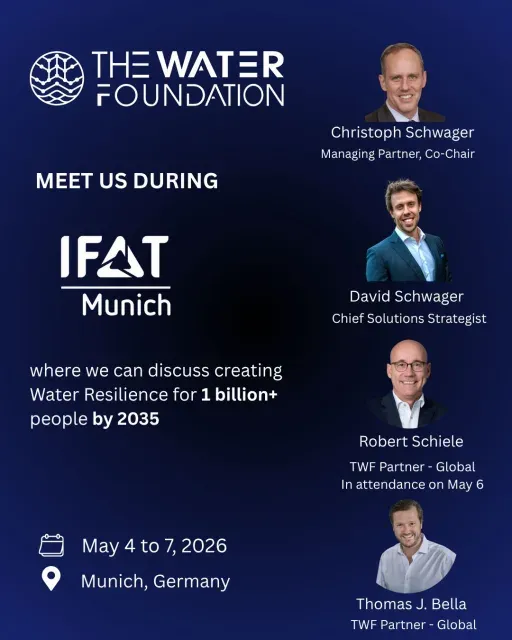
The Water Foundation
FACT THURSDAY WATER NEEDS MORE CAPITAL - AND BETTER PATHWAYS FOR IT TO FLOW Projected global financing needs for water infrastructure exceed $6.7 trillion by 2030 (OECD estimate, excluding irrigation and energy-related water resource development). The gap is real - and growing. But it’s not just about how much capital is needed, but about how effectively it can be deployed. Water underpins nearly all economic activity: ~70% of global withdrawals go to agriculture ~10% are tied to energy systems It is critical to data centres, semiconductors, and industrial production. Yet as an investment landscape, water remains difficult to access and scale. Today, that shows up as: • Unpriced water risk across assets, sovereigns, and supply chains • Fragmented, sub-scale projects that cannot absorb institutional capital • Limited standardised metrics linking water performance to financial returns • A lack of repeatable investment vehicles across venture, growth, and infrastructure The result: Capital is both insufficient and constrained in how it can move. At The Water Foundation, the focus is on addressing both sides of this equation - mobilising more capital and building the systems that allow it to deploy effectively. That means: • Pricing water risk into financial and sovereign decision-making • Aggregating projects into basin-level platforms that can scale • Structuring integrated capital stacks from early-stage to infrastructure • Creating viable entry and exit pathways for institutional investors Blended finance is a key tool - but investability at scale is the objective. Because when water becomes structured, priced, and scalable, capital doesn’t just exist - it participates. The opportunity isn’t just to close a gap. It’s to build a market. #WaterInvestment #ClimateFinance #Infrastructure #SystemsChange
8LinkedIn
The Water Foundation
The Water Foundation is in San Francisco for SF Climate Week 2026 (April 18 - 26, 2026), a global gathering featuring 700+ events across climate, capital, and innovation. Throughout the week, we’re engaging in key water-focused conversations - from resilience and adaptation to investment strategies shaping the future of water systems. We’re meeting with philanthropists, investors, and institutions working to scale solutions and unlock capital for water resilience at the speed and scale required. If you’re in SF and building at the intersection of water and climate, come find us or reach out to the team. Michael Staton Sarabeth Brockley
212LinkedIn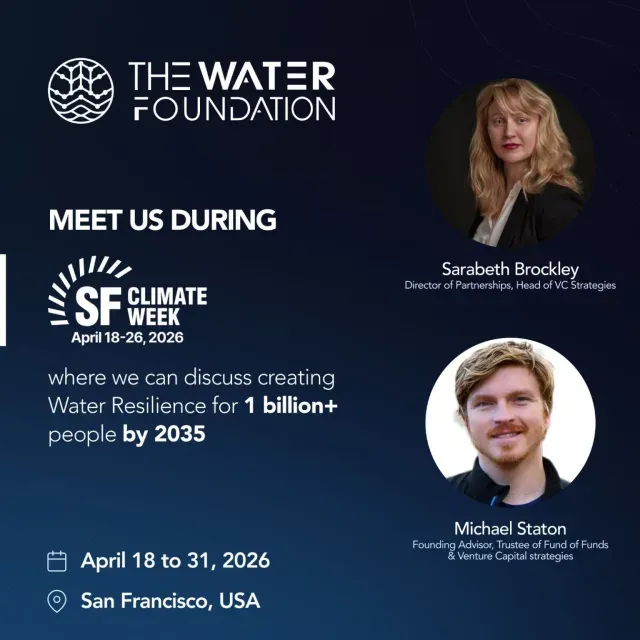
The Water Foundation
FACT THURSDAY INDUSTRY IS NOT A MARGINAL WATER USER: IT’S A SYSTEMIC COMPETITOR Industrial water demand is projected to increase by ~400% by 2050: outpacing all other sectors in growth rate. At the same time: - Agriculture still accounts for ~70% of global freshwater withdrawals. - Industry accounts for ~20% globally - but over 40-50% in high-income economies. By 2050, global water demand is expected to exceed supply by ~40% This sets up a three-way structural competition: Food Systems vs. Industrial Output vs. Urban consumption Where the pressure concentrates: 1. Basin-level scarcity, not global scarcity Water crises are locally concentrated yet cross-boundary. Over 50% of global industrial production is already located in high or extremely high water-stress regions. This means disruption risk is geographically clustered but globally transmitted. 2. Water intensity of key industries -Semiconductors: ~2-4 million gallons/day per fab (ultrapure water dependency). -Textiles: ~2,700 liters per cotton shirt equivalent. -Mining & metals: among the largest industrial abstractors globally. -Energy: thermal power alone accounts for ~10% of global freshwater withdrawals. These are not edge sectors - they are core to global trade and GDP. 3. The energy transition increases water demand -Hydrogen (electrolysis) requires ~9-15 liters per kg of H₂ (process only, excluding cooling). -Battery and EV supply chains are material and water-intensive. -Biofuels directly compete with agriculture for water. -Decarbonization is therefore water-additive, not water-neutral. 4. Economic consequences are already visible Water-related risks could impact ~$5–6 trillion in GDP annually by 2050. Corporates are increasingly disclosing water risk via frameworks like CDP. Insurance and credit markets are beginning to price basin-level water stress. What changes structurally -> Water is shifting from an operational input to a factor of production with allocation hierarchy. In practice, this means: - Governments will implicitly prioritize between jobs (industry), food (agriculture), and stability (cities) - Industrial siting decisions will increasingly follow hydrology, not just labor or capital - “Water-secure supply chains” become a competitive advantage Bottom line: The defining constraint is no longer access to capital or energy. It is access to reliable water at scale. The next decade will not just be about decarbonization, it will be about an at scale hydro-economic rebalancing. Sources: OECD, World Bank, FAO, World Resources Institute Photo Credit: Aris Rovas via Unsplash #IndustrialPolicy #WaterRisk #SupplyChains #ResourceSecurity #HydroEconomics #WaterEconomics
71LinkedIn
The Water Foundation
FACT THURSDAY: WATER MATTERS IN ENERGY SYSTEMS - BUT NOT IN THE WAY WE OFTEN THINK. Water and energy are often described as “interdependent systems.” That framing is too simplistic. Today’s energy system - particularly fossil-based generation - is highly water-intensive: – Thermal power plants account for ~10% of global freshwater withdrawals for cooling. – Extraction and processing add further pressure. (Source: IEA, World Bank) The shift towards renewables changes this dynamic significantly: – Solar and wind require minimal water during operation. – Moving away from thermal generation reduces structural water demand at system level. In that sense, the energy transition can reduce water intensity overall (a secondary water footprint exists in renewables manufacturing - silicon for PV, rare earths for batteries and wind - but this is a supply-chain question, not a system-level constraint.) So where does water actually matter? Not everywhere - but very specifically: by location, technology, and infrastructure. Certain energy assets remain water-dependent: – Thermal plants (including nuclear) require cooling water – Hydropower depends directly on water availability and basin hydrology And a structurally new layer is now emerging: data centres. The digital economy is driving energy demand at scale. Data centres both consume significant energy and require large volumes of water directly for cooling, a single hyperscale facility can consume millions of litres per day. In already water-stressed regions, this dual demand - energy load and direct water consumption concentrated in one facility - creates a local infrastructure constraint that planning frameworks rarely anticipate. This is not a general system dependency between energy and water. It is location-specific, physical, and often invisible until it matters. The real question is therefore not whether water constrains the energy transition as a whole. It doesn’t - at least not universally. The real question is: where do water constraints shape infrastructure decisions? This requires a shift: – From global narratives → to location-specific system design – From sector thinking → to infrastructure planning across water and energy – From assumptions → to resource-aware decision making At TWF, we treat this as a precision question. Not energy vs. water - but how infrastructure is sited, designed, and capitalised within local resource constraints, basin realities, and long-term hydrological risk. Because the next bottlenecks will not always be visible at the global level. They will be local, physical, and infrastructure-specific - and addressable only if they are anticipated. From insight to infrastructure. #EnergyTransition #WaterEnergyNexus #HydroSecurity #SystemsThinking #TheWaterFoundation #LiquidGeopolitics Source: ERM, IEA, World Bank Picture: Alex Simpson via Unsplash
4LinkedIn
The Water Foundation
The Water Foundation is happy to be back in Paris for ChangeNOW Summit 2026 to discuss effective solutions for the planet. Meeting philanthropists, investors, and institutions committed to help build and invest in technologies that shape water resilience. Come find us or reach out to the team. Verena Alice Sturm Christoph Schwager Christophe C. Meeus
26LinkedIn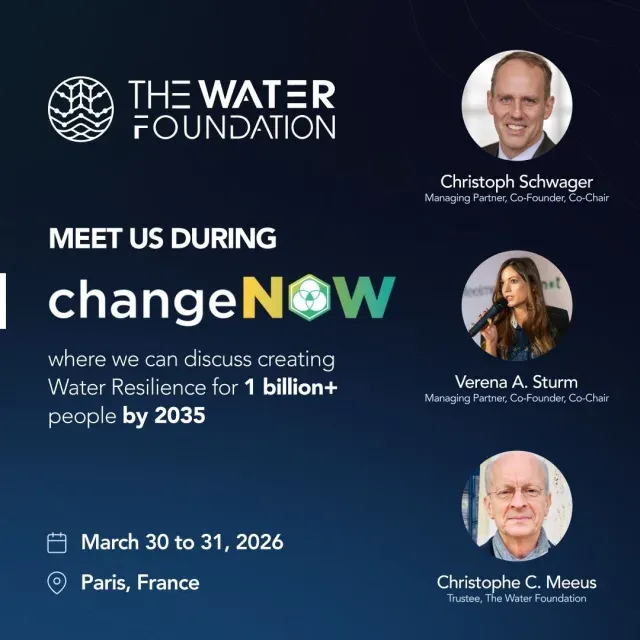
The Water Foundation
FACT THURSDAY UNSAFE WATER KILLS MORE PEOPLE THAN VIOLENCE Every year, over 1 million people die from diseases linked to unsafe water, sanitation, and hygiene. That rival - and in some years exceeds - deaths from violence globally. At any given time, 2 billion people lack safely managed drinking water, and 3.5 billion lack safely managed sanitation. This is not just a public health issue. It is a productivity crisis, a fiscal burden, and a systemic drag on development. We respond to visible crises. But water-related mortality is a silent, continuous emergency. There is no vaccine for water insecurity. Only infrastructure, governance, and investment. #WaterSecurity #PublicHealth #WASH #LiquidGeopolitics Source: WHO, UNICEF, JMP Photo Credit: Andreea Popa via Unsplash
11LinkedIn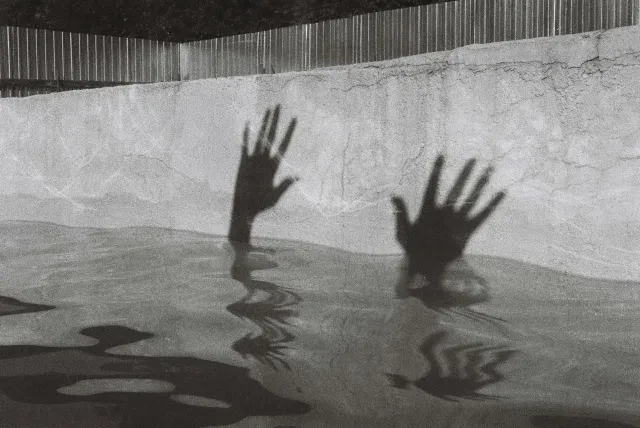
The Water Foundation
Today, The Water Foundation team is in Hamburg, joining SDG Impact Finance Initiative (SIFI) at the invitation of Lena-Katharina Gerdes and her team. (Thank you for the wonderful event!) The discussion focused on moving philantrophic capital from traditional grant-making to catalytic capital, and how foundations can activate their balance sheets through instruments such as bonds, blended funds, and Social Success Notes. Perspectives spanned ecosystem collaborations and public sector engagement, including insights from Michael Eggenschwiler, Honorary Consul of Switzerland for Hamburg and Schleswig-Holstein and from Lennart Duschinger, Head of Sustainable Finance, Ministry of Finance, Luxembourg. Key takeaway - Foundations cannot operate in isolation. To meaningfully address the SDG financing gap, capital needs to be bundled, structured, and deployed at scale, while being measured not just by impact delivered, but by additional capital mobilized. Measuring the impact of every dollar both, on the ground and in additional capital unlocked, is a mission in itself. Seeing how many governments, foundations, and individual actors are starting to funnel their resources towards closing the SDG funding gap is truly inspiring. Encouraging to see this level of alignment across governments, foundations, and investors! #ImpactFinance #BlendedFinance #WaterFinance #SDGs #Water #SDG6 #BlueFinance #SocialImpact #TheWaterFoundation
211LinkedIn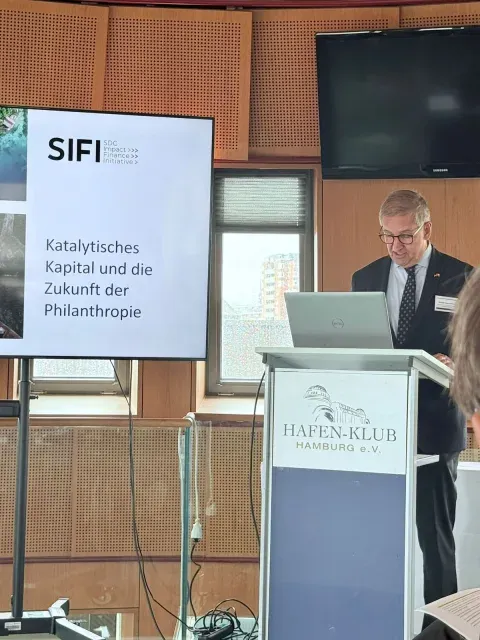
The Water Foundation
Water is one of the largest systems on earth, and one of the least represented in how we make decisions. The longer you work on water, the less intuitive the problem becomes. Water underpins every system we depend on - yet it remains largely absent from how risk is priced, capital is allocated, and security is defined. Not because the data isn’t there. Because water has been treated as stable. That assumption no longer holds. 4 billion people already face severe water scarcity at least one month a year, demand is set to exceed supply by ~40% by 2030, and water scarcity is already constraining growth and investment - despite underpinning an estimated $58 trillion in economic value. This is the paradox. World Water Day makes water visible. What matters is what enters decision-making afterwards. Three practical shifts we should look at: • Treat water as a constraint in every investment, policy, or infrastructure decision - not an externality • Ask where water risk sits in your models, portfolios, and supply chains • Move from acknowledging water to allocating capital, data, and accountability towards it Because the question is no longer whether water matters. It is whether we account for it - before it accounts for us. #WorldWaterDay #WaterSecurity #HydroSecurity #WaterFinance #TheWaterFoundation Sources: UNESCO, World Bank, OECD and WEF Photo: Abdul Mustafa via Unsplash
13LinkedIn
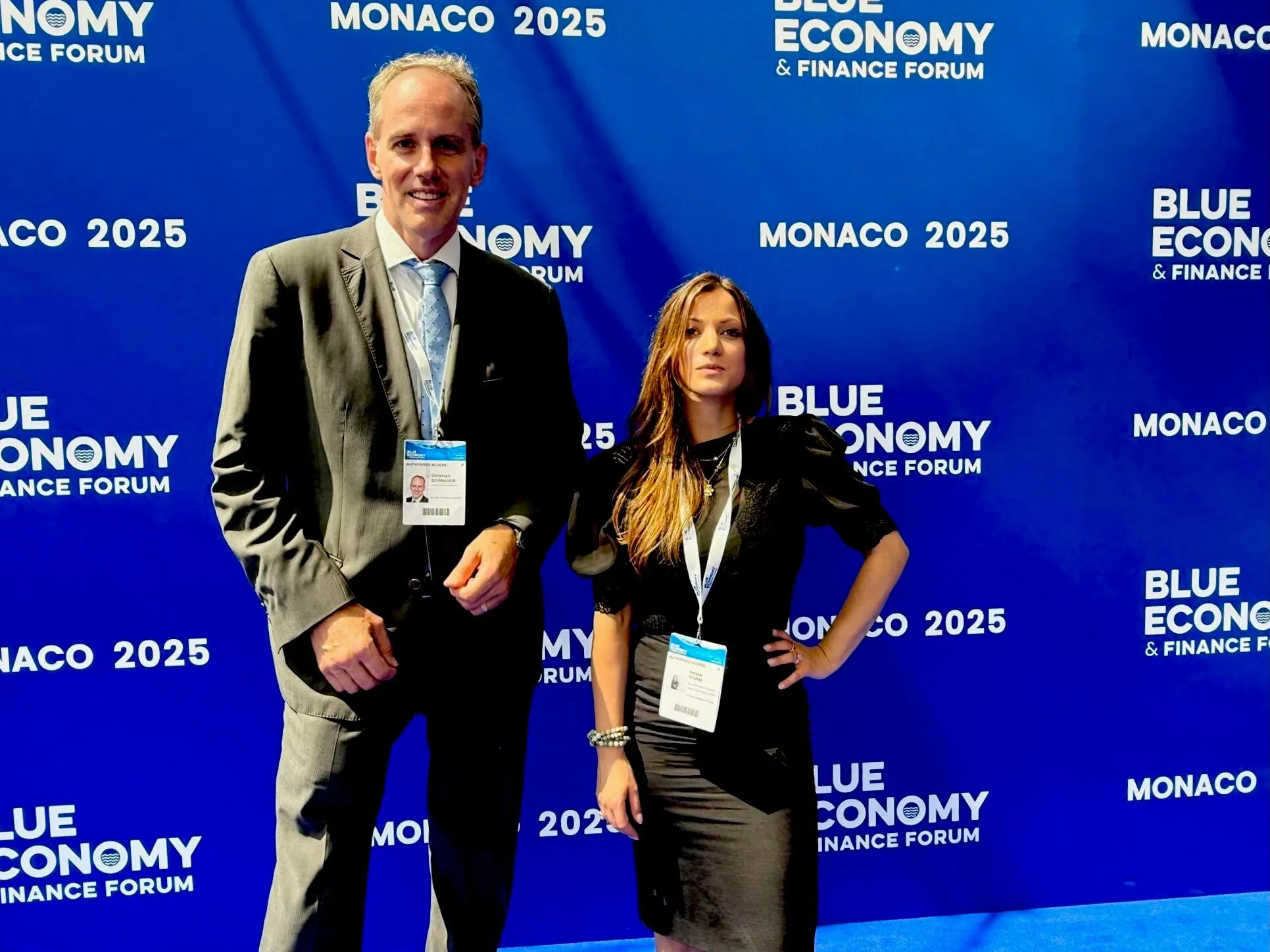
Christoph Schwager and Verena Sturm representing The Water Foundation at the Blue Economy & Finance Forum Monaco 2025
The forum's website